
The Rise of AI in Creative Fields
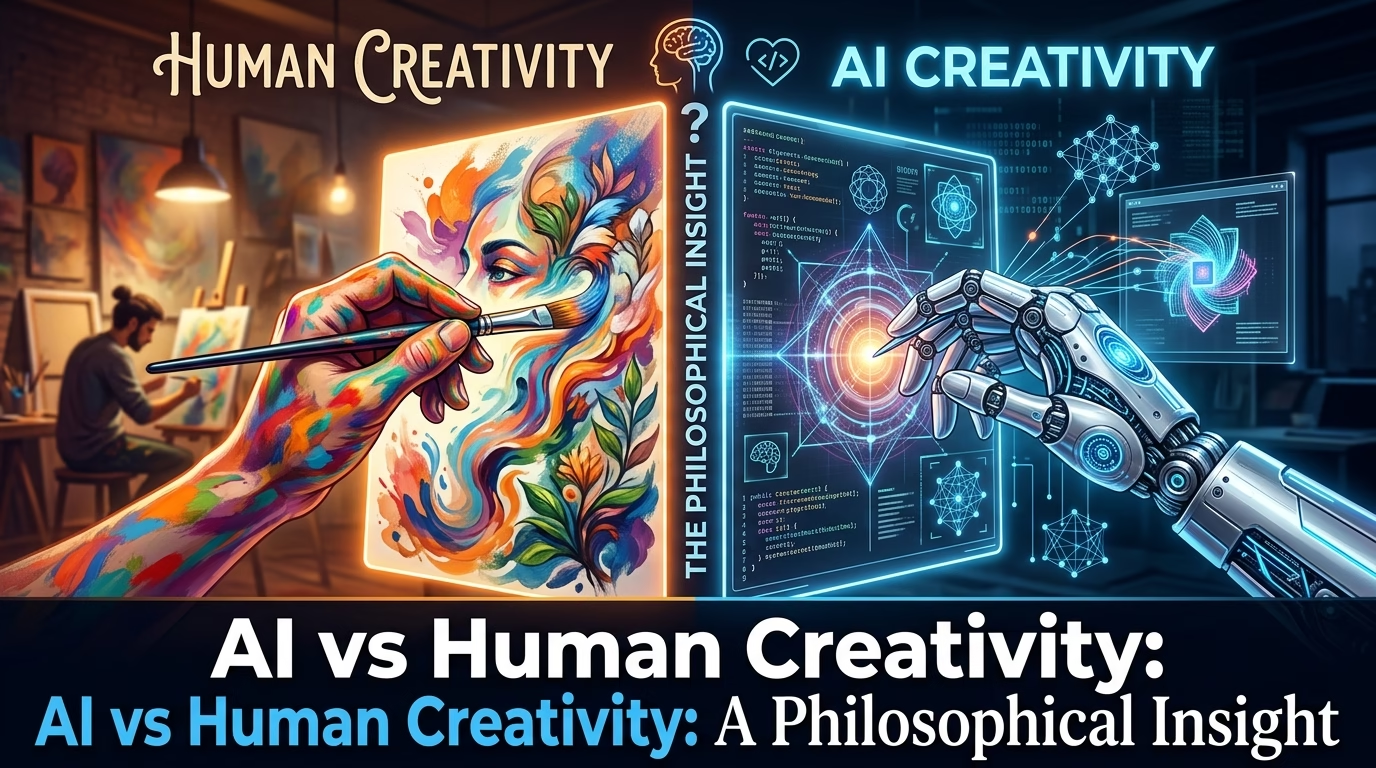
Today, artificial intelligence can replicate styles from Ghibli to Pixar, sketching to painting, and even voice generation of legendary singers like Mohd Rafi. AI can write film screenplays, dialogues, and generate songs within seconds.
The Question: Is AI the End of Artists?
As AI rapidly evolves, many fear that it might replace human creativity. Especially in Bollywood, where many works are copied, AI can now do that job faster and better.
But what about independent artists? What about originality?
Are Human Thoughts Truly Original?
Philosophers like Jiddu Krishnamurti and writers like Mark Twain have argued that our ideas are shaped by conditioning and are seldom truly original. Twain compared creativity to a mental kaleidoscope — a new combination of existing elements.
AI mirrors this. It learns from massive data inputs — books, images, styles, voices — and produces outputs based on learned patterns. But humans also learn in the same way: through exposure, study, and imitation.
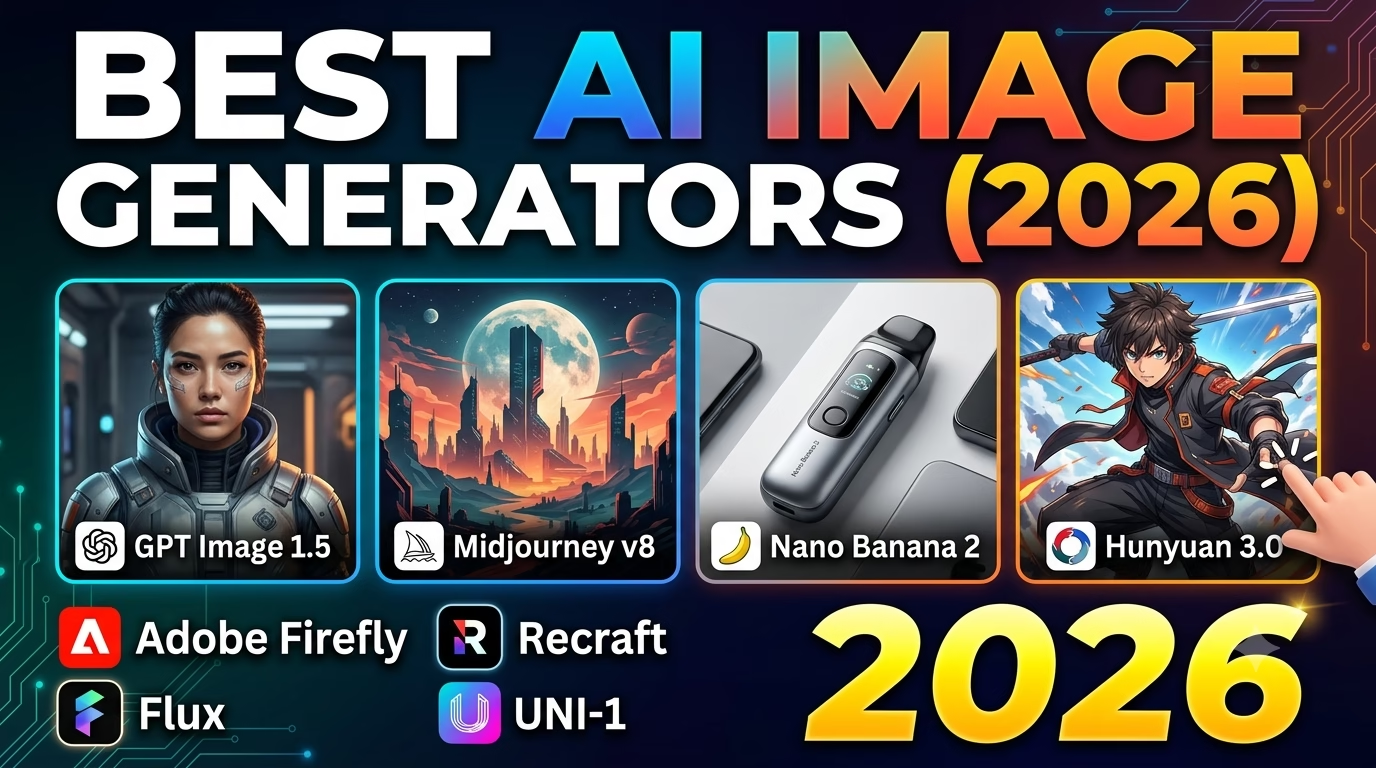
Top Free AI Tools and How They Work in 2025
The Hypocrisy of Inspiration vs Imitation
Art students study Van Gogh, Frida Kahlo, Tagore, Frost, Shakespeare, and many others. Film students analyse Satyajit Ray, Scorsese, and Tarkovsky. They then create works inspired by these legends.
When humans do it, it’s called “inspiration.” When AI does the same, it’s called “copying.”
Bollywood’s Long History of Copying
From Aamir Khan to Pritam, countless Bollywood stars and musicians have copied Hollywood or regional films and songs:
- Laal Singh Chaddha – Forrest Gump 1994
- Ghajini – Memento 2000
- Fanaa – Eye Of The Needle 1981
- Mann – An Affair To Remember 1957
AI now does this copying faster and better. Hence, the factory-style, formula-based film production is most at risk.
The True Threat: Not AI, But Corporations
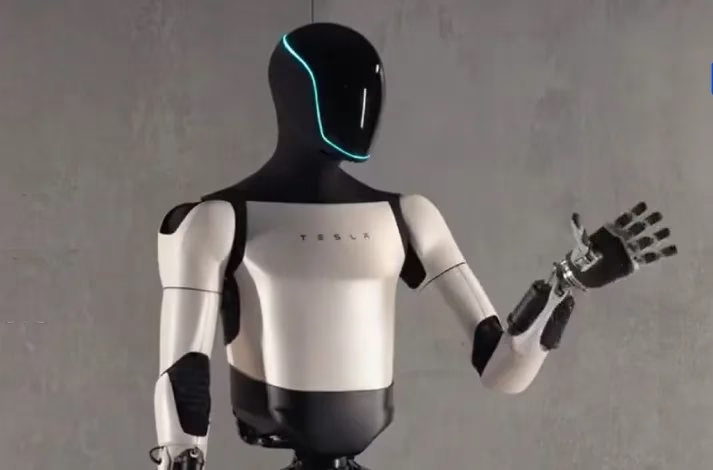
AI isn’t inherently harmful. The real danger is how capitalist corporations use it to cut costs and replace human workers:
- AI avatars of news anchors
- AI-generated storyboards
- AI in customer service
Like previous technological shifts — photography replacing sketching, software replacing accountants — AI is continuing that trend.
Will AI Replace All Artists?
Not all artists are at risk. AI lacks personal experience, a key ingredient in authentic storytelling.
Example: Anurag Kashyap
- No Smoking expressed anger at censorship.
- Gangs of Wasseypur drew from deep-rooted societal issues.
- Dev D was a personal reinterpretation of Devdas.
Example: Dibakar Banerjee
- His diverse filmography includes Khosla Ka Ghosla, Oye Lucky! Lucky Oye!, Shanghai, and Detective Byomkesh Bakshi.
These filmmakers cannot be replaced by AI because their work is shaped by life experiences.
Independent Cinema and Personal Voice
From Kerala’s Fahadh Faasil to indie gems like Trance and Kumbalangi Nights, artists with distinct voices and personal visions continue to thrive.
Even globally, filmmakers like Quentin Tarantino proudly speak of their influences, but they process them uniquely.
The Real Role of AI in Creativity
AI is a tool, not a replacement. Just like:
- Calculators didn’t kill math.
- Tablets didn’t end art.
AI empowers individuals:
- Create illustrations for children’s books.
- Write and animate short films.
- Build websites and games alone.
The Future Belongs to Enterprising Artists
If corporations are using AI to cut jobs, individual artists must use AI to amplify their work. Learning AI tools is now a necessity to stay relevant and powerful in the creative economy.
As Jim Jarmusch said: “Steal from anywhere that fuels your imagination… if you do this, your work will be authentic.”
AI won’t replace true creativity. It will amplify it — if used wisely.
Key Takeaway:
AI is not the end of creativity — it is a tool. Use it to break free from formulaic traps and build your own original, authentic style.